FOLLOW ME: MADE BY JESUS › MESSAGE 7
MESSAGE 7 · Matthew 16:24–28
Surrender: Come After Me
Big Idea: Following Jesus means surrendering ourselves to His road, trusting that what is lost for Him will be found when He comes in glory.
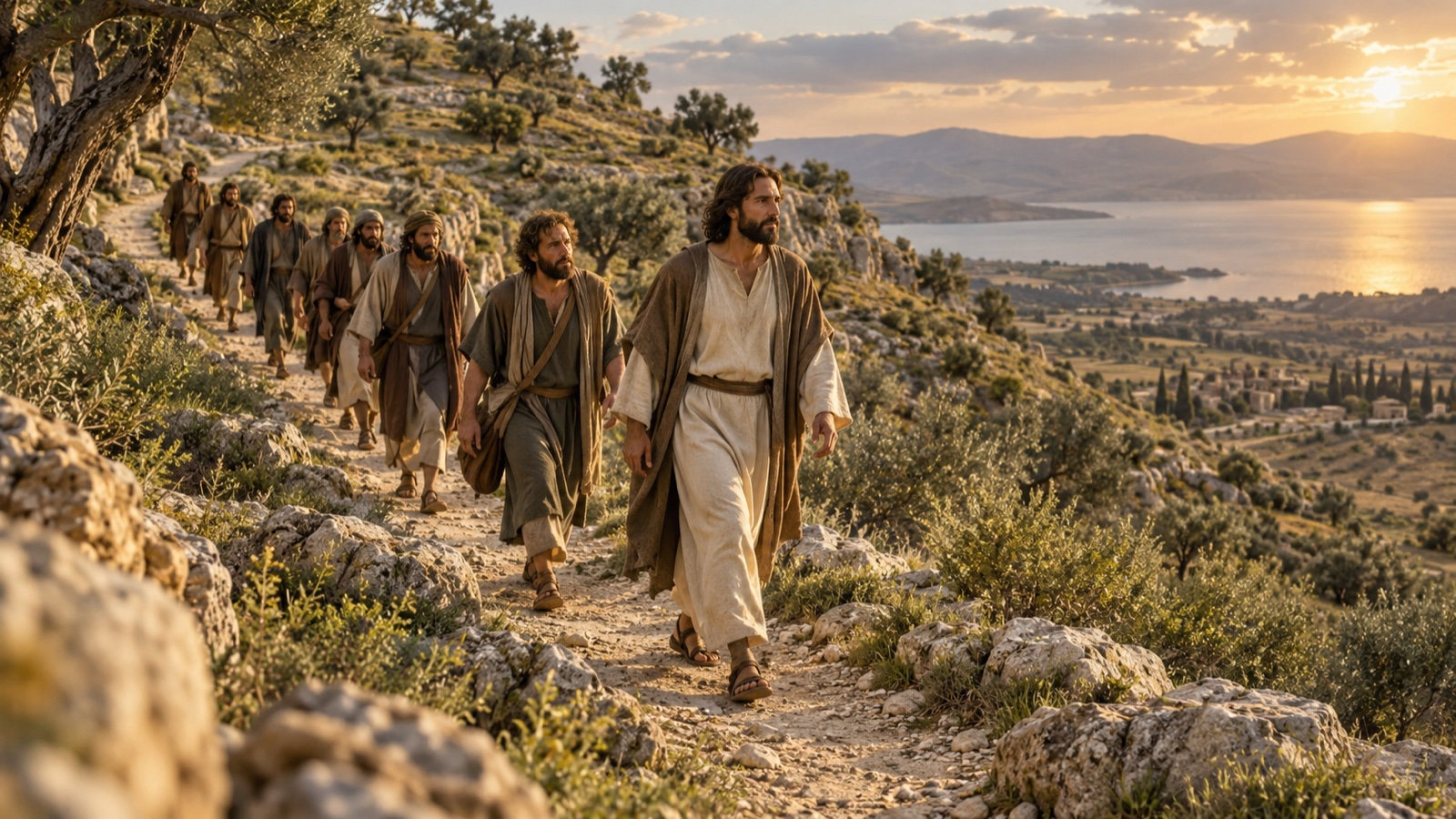
Jesus has just told Peter, “Get behind Me.” In Matthew 16:23, ὀπίσω μου (opisō mou) means “behind Me.” In Matthew 16:24, the same words appear in His invitation to come “after Me.” Jesus has just told Peter where a disciple belongs. Now He tells him what life in that place requires.
READ THE TEXT
MATTHEW 16:24–28 | NASB95
24 Then Jesus said to His disciples, “If anyone wishes to come after Me, he must deny himself, and take up his cross and follow Me.
25 “For whoever wishes to save his life will lose it; but whoever loses his life for My sake will find it.
26 “For what will it profit a man if he gains the whole world and forfeits his soul? Or what will a man give in exchange for his soul?
27 “For the Son of Man is going to come in the glory of His Father with His angels, and WILL THEN REPAY EVERY MAN ACCORDING TO HIS DEEDS.
28 “Truly I say to you, there are some of those who are standing here who will not taste death until they see the Son of Man coming in His kingdom.”
Scripture quotations taken from the (NASB®) New American Standard Bible®, Copyright © 1995 by The Lockman Foundation. Used by permission. All rights reserved. www.Lockman.org
FOLLOW → LOSE → FIND
Teaching Outline
- Jesus defines what it means to follow Him. — Matthew 16:24
- Jesus reveals what is truly gained and lost. — Matthew 16:25–26
- Jesus promises that glory is coming. — Matthew 16:27–28
What We Covered
I. Jesus defines what it means to follow Him. — Matthew 16:24
DENY YOURSELF → TAKE UP YOUR CROSS → FOLLOW ME
ἀπαρνησάσθω ἑαυτόν (aparnēsasthō heauton) — “let him deny himself.” Self-denial is not the denial of personhood. It is the denial of self-lordship. To deny myself is to say “no” to myself whenever “self” competes with following Jesus. What I want is not the authority. What I think makes sense is not the authority. Jesus is.
When what I want collides with what Jesus wants, who moves?
Jesus’ cross image carried the first-century force of shame, execution, and death—not ordinary inconvenience. Luke 9:23 adds καθ᾽ ἡμέραν (kath’ hēmeran) — “daily.” Christ’s cross accomplishes redemption. Our cross-bearing describes the costly path of following the Redeemer.
DENY YOURSELF — surrender self-rule.
TAKE UP YOUR CROSS — accept the cost.
FOLLOW ME — stay behind Jesus.
A disciple does not ask Jesus to follow the life he has chosen. A disciple surrenders himself to follow the road Jesus chooses.
II. Jesus reveals what is truly gained and lost. — Matthew 16:25–26
SAVE → LOSE
LOSE FOR CHRIST → FIND
Jesus says ἕνεκεν ἐμοῦ (heneken emou) — “for My sake.” He does not glorify loss for its own sake. The life surrendered to Christ is the life ultimately found.
ψυχή (psychē) can mean “life,” “soul,” or “self” according to context. The same Greek word appears four times here: NASB95 renders it “life / life” in verse 25 and “soul / soul” in verse 26. Luke 9:25 speaks of one who “loses or forfeits himself.” You can gain everything around you and still lose you.
Jesus’ “whole world” presses the gain-and-loss question to its limit: PROFIT → GAIN → FORFEIT → EXCHANGE. ἀντάλλαγμα (antallagma) means “exchange; equivalent given in return.” You can gain everything and still lose everything.
THE WORLD SAYS: SAVE YOURSELF.
JESUS SAYS: LOSE YOUR LIFE FOR ME.
Jesus knows how the books close because He is the One who closes them.
III. Jesus promises that glory is coming. — Matthew 16:27–28
NOW → THEN
Peter is calculating according to what happens now. Jesus tells him to calculate according to what happens then.
CROSS NOW → GLORY THEN
Daniel 7:13–14 provides the background for the Son of Man, glory, kingdom, and dominion. PETER SEES: SUFFERING → DEATH. JESUS REVEALS: SUFFERING → DEATH → RESURRECTION → GLORY. Peter is not wrong to expect glory. He is wrong to reject God’s road to it.
Jesus warns that He will repay every person according to deeds. Judgment according to deeds is not justification by deeds. Deeds disclose allegiance; they are not the meritorious ground of justification.
Matthew 16:28 leads into Matthew 17:1—“Six days later…”—and Matthew 17:2, where Jesus is transfigured before Peter, James, and John. Peter later calls them “eyewitnesses of His majesty” (2 Peter 1:16–18). The Transfiguration previews the coming kingdom; it does not exhaust Christ’s future coming.
Reflection & Application
- When what I want collides with what Jesus wants, who moves?
- What am I unwilling to lose in order to follow Jesus?
- Where am I currently tempted to calculate according to what happens now rather than what Jesus promises then?
The Message in One View
I. FOLLOW HIM
DENY YOURSELF → TAKE UP YOUR CROSS → FOLLOW ME
II. TRUST HIS ACCOUNTING
SAVE → LOSE · LOSE FOR CHRIST → FIND
III. LOOK TO HIS GLORY
CROSS NOW → GLORY THEN
FOLLOW → LOSE → FIND
A disciple can surrender everything to Jesus because nothing surrendered to Jesus is ultimately lost.
Choose the resource you need
Use the participant handout during class. Review the completed notes afterward, or open the teaching slides for a visual summary of the lesson.
Didn’t attend the class? Start with the Completed Notes for the fullest public study resource.
DIG DEEPER
DIG DEEPER 01
Deny Yourself: More Than Giving Things Up
Matthew 16:24–26
Explore why denying yourself is more than giving up good things—and why genuine discipleship requires surrender to Christ.
DIG DEEPER 02
Take Up Your Cross: More Than Bearing Life’s Burdens
Matthew 16:24
Taking up your cross means surrendering yourself to Jesus so completely that you are willing to follow Him through suffering, shame, and even death.
DIG DEEPER 03
What Does It Profit a Man?
Gaining the World and Losing Your Life · Matthew 16:25–27
Nothing you gain in this world can compensate for losing your life before God, but whoever loses his life for Christ’s sake will find it.