
Correction: Get Behind Me
Matthew 16:21–23 · NASB 1995
Handouts & ResourcesFOLLOW ME: MADE BY JESUS — Message 6
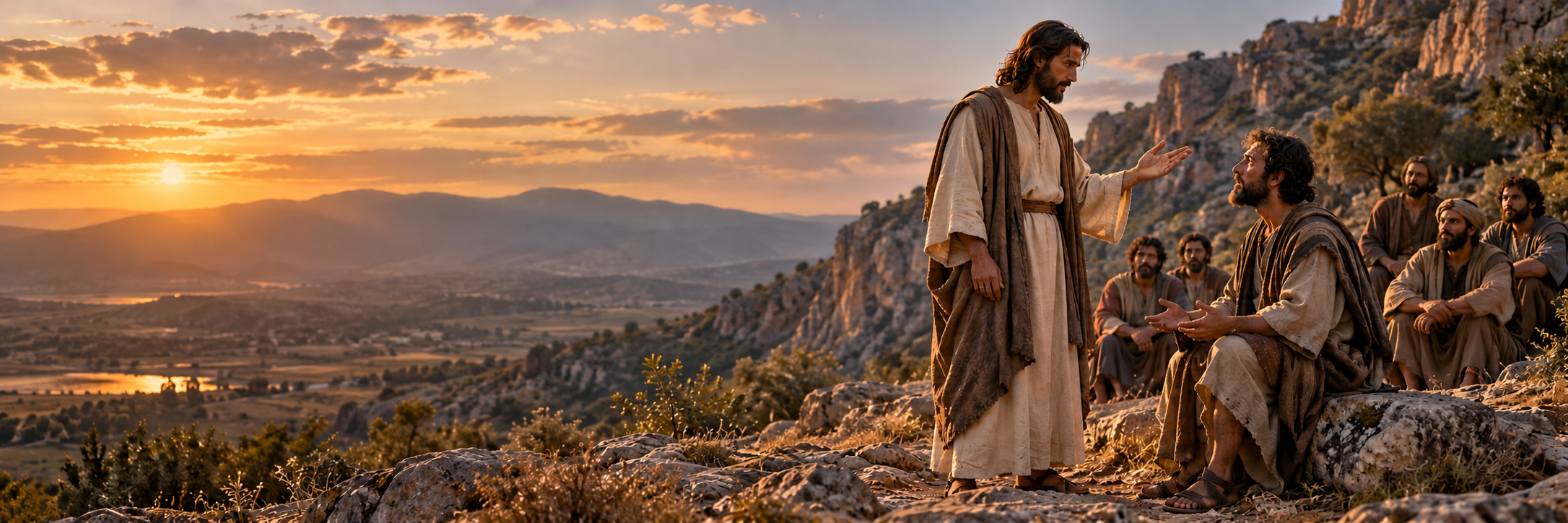
Central Truth: We cannot faithfully follow Jesus while insisting that He conform to our expectations.
When a True Confession Meets an Unwelcome Road
Peter has just confessed Jesus as the Christ, the Son of the living God. In Matthew 16:21–23, Jesus begins explaining the suffering, death, and resurrection that lie ahead. Peter receives this disclosure very differently from the declaration of Christ’s identity.
The contrast exposes a central issue in discipleship. We may speak truly about Jesus and still resist what He reveals when it contradicts our expectations. Peter must learn that knowing the Messiah includes submitting to the Messiah’s mission.
Jesus Reveals What He Must Do
Matthew 16:21
Matthew marks a significant transition as Jesus begins showing His disciples that He must go to Jerusalem, suffer at the hands of the religious leaders, be killed, and rise on the third day. The word of necessity governs the road He announces. Jesus is not merely warning that His plans might fail.
The sequence must be kept together. His disclosure includes Jerusalem, suffering, death, and resurrection. To hear only the suffering and death would be to miss the victory He also announces. To welcome the victory while rejecting the suffering would likewise refuse His word.
The cross therefore cannot be treated as an unfortunate interruption to an otherwise successful mission. Jesus identifies the road He must take. Within Matthew’s Gospel, His later words about giving His life as a ransom and shedding His blood for forgiveness explain the saving significance of that death.
Peter does not yet grasp this necessity. The difficulty is not that Jesus has failed to speak clearly enough for Peter to approve His plan. The disciple must receive a purpose greater than the one he presently understands.
Peter Rejects What Jesus Reveals
Matthew 16:22
Peter takes Jesus aside and begins to rebuke Him. He insists that these things must never happen to his Lord. His words place his own judgment against the necessity Jesus has just declared.
We should not invent motives the passage does not identify. Peter’s response may include sincere attachment to Jesus alongside an incomplete understanding of His mission. Whatever affection may lie behind the objection, however, the objection itself resists the word of Christ.
This distinction helps us take the warning seriously without turning Peter into a caricature. Sincerity does not make an argument right. We can desire what seems good to us and still oppose what God has revealed. Love for Jesus must become a willingness to receive His purposes, including those that unsettle us.
Peter’s error also challenges the habit of making our expectations the measure of divine faithfulness. The question is not whether God’s word fits a future we would have chosen. The question is whether we will trust the Lord whose wisdom exceeds our own.
Jesus Redirects Peter to Follow Him
Matthew 16:23
Jesus responds with a severe rebuke. He addresses Peter as Satan and identifies him as a stumbling block because he is setting his mind on human interests rather than God’s. The severity belongs to the seriousness of opposing the road to the cross.
We should not turn the address into a claim that Peter has ceased to be Peter or that the text explicitly describes demonic possession. Jesus exposes the character of the proposal: a road that rejects His suffering stands against God’s redemptive purpose. Peter’s words place an obstacle where submission is required.
The command to get behind Jesus also directs Peter toward the proper place of a disciple. Jesus leads; Peter follows. The following passage develops that relationship as Jesus calls His disciples to deny themselves, take up their cross, and follow Him.
Correction is therefore part of Peter’s formation. Jesus does not allow an inadequate understanding to govern the mission. He confronts Peter so that the disciple may learn to receive the Lord’s word rather than try to lead Him along another road.
The Savior’s Road Is the Disciple’s Hope
The movement of the passage is clear: Jesus declares what must happen, Peter insists it must never happen, and Jesus corrects him. The point is larger than a disagreement about the future. The road Peter resists is the road by which the Savior will accomplish redemption.
We cannot faithfully follow Jesus while insisting that He conform to our expectations. His correction calls us away from self-appointed authority and back to trust. We need the humility to acknowledge that our judgment may be mistaken even when our feelings are sincere.
Christ’s determination to go to the cross gives us reason to receive that correction gratefully. He proceeds toward the saving work His disciples need. We follow a Lord whose purposes are wiser than our objections and whose grace is greater than our understanding.
For Reflection
- Why must Jesus’ announcement of resurrection remain connected to His announcement of suffering and death?
- How can sincere concern coexist with resistance to Christ’s word?
- Where have you treated your expectations as the standard Jesus must meet?
- What would it mean in that situation to receive His correction and follow Him?
FOLLOW ME: MADE BY JESUS traces how Jesus calls, teaches, corrects, restores, and transforms Peter into the disciple He intends him to become.
Study & Teaching Resources
Use the participant handout during class. Review the completed notes afterward, or open the teaching slides for a visual summary of the lesson.
Didn’t attend the class? Start with the Completed Notes for the fullest public study resource.
Dig Deeper
Read Matthew 16:21–23 (NASB 1995)
Read the passage — NASB 1995
MATTHEW 16:21–23 | NASB95
21 From that time Jesus began to show His disciples that He must go to Jerusalem, and suffer many things from the elders and chief priests and scribes, and be killed, and be raised up on the third day.
22 Peter took Him aside and began to rebuke Him, saying, “God forbid it, Lord! This shall never happen to You.”
23 But He turned and said to Peter, “Get behind Me, Satan! You are a stumbling block to Me; for you are not setting your mind on God’s interests, but man’s.”
Scripture quotations taken from the New American Standard Bible® (NASB), Copyright © 1960, 1971, 1977, 1995 by The Lockman Foundation. Used by permission. All rights reserved. www.Lockman.org