
John 13:1–17
Handouts & ResourcesFOLLOW ME: MADE BY JESUS — Message 12
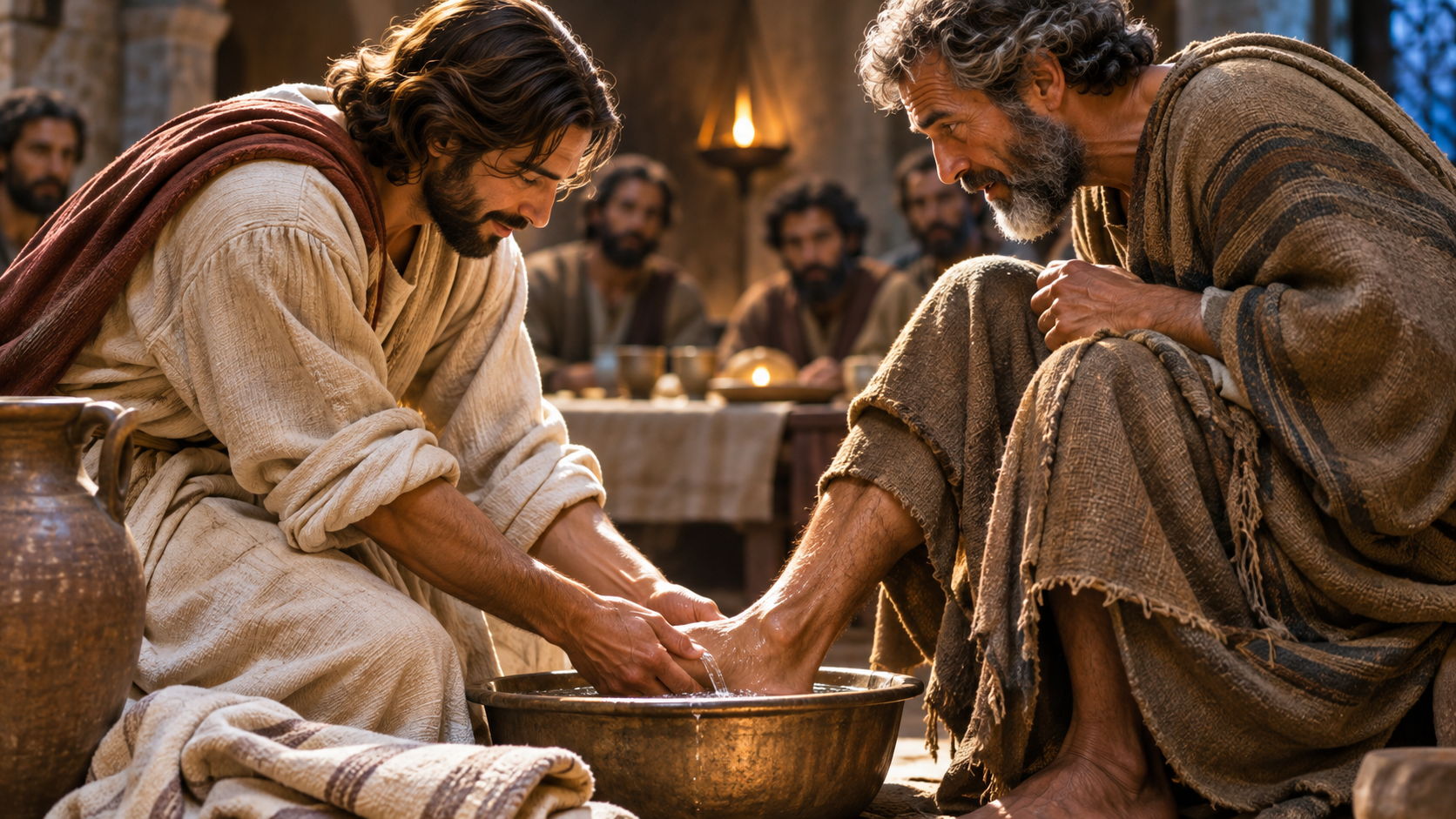
Central Truth: Jesus graciously provides the cleansing His disciples need and calls them to follow His example of humble, loving service.
When the Greatest Becomes the Servant
As Jesus approached the cross, He gathered with His disciples to share a final meal. Although He had repeatedly prepared them for His coming suffering and death, they still struggled to understand the nature of His mission and what it meant to follow Him.
Luke records that a dispute arose among the disciples concerning which of them should be regarded as the greatest (Luke 22:24). Their discussion revealed a misunderstanding of greatness that Jesus had addressed before. They were still thinking in terms of position and prominence, while Jesus was preparing to demonstrate the self-giving love that characterized His mission.
Jesus responded by contrasting the world’s understanding of greatness with the character of leadership among His followers. Those who exercise authority in the world often emphasize their position over others. Among His disciples, however, greatness must be expressed through humble service. The greatest is to become like the youngest, and the leader like one who serves.
Jesus then pointed to Himself as the supreme example. Although He was their Lord and Teacher, He was among them as One who serves (Luke 22:27).
John’s Gospel records a remarkable demonstration of this truth during the same final-meal setting. Jesus rose from supper, laid aside His outer garments, took a towel, and began washing His disciples’ feet. The One who possessed all authority willingly performed the work of a servant.
Neither Luke nor John explicitly establishes the precise sequence between the dispute over greatness and the footwashing. Nevertheless, the theological contrast between the two accounts is striking. While the disciples struggled with questions of greatness, Jesus demonstrated the humility that ought to characterize those who follow Him.
Yet John 13 teaches us something even more significant than the importance of humble service. When Jesus came to Peter, their conversation revealed a spiritual necessity that Peter did not yet understand. Before he could properly follow Christ’s example, he needed to receive the cleansing that only Christ could provide.
The order is essential: Christ’s gracious cleansing comes first, and our humble service follows.
Jesus Demonstrates His Love Through Humble Service
John 13:1–5
John introduces the account by emphasizing Jesus’ knowledge of His approaching departure and His continuing love for those who belonged to Him. Jesus knew that His hour had come, that He would soon return to the Father, and that Judas was moving toward betrayal. Nothing about the approaching events took Him by surprise.
John also tells us that Jesus knew the Father had given all things into His hands and that He had come from God and was returning to God. These details are essential to understanding the significance of His actions. Jesus was fully aware of His authority and divine origin when He chose to wash His disciples’ feet.
His humility did not result from uncertainty about His identity or a lack of authority. He served precisely as the One who knew who He was and what the Father had entrusted to Him.
The significance of this contrast should not be overlooked. Jesus, who possessed all authority, willingly assumed the place of a servant. His humility did not diminish His lordship; it demonstrated the extraordinary character of His love.
John tells us that Jesus loved His own to the end. His actions in the upper room illustrate that love, while the approaching cross would reveal its saving significance in an even greater way. The footwashing was not the saving sacrifice itself, but it occurred in the shadow of the sacrifice Jesus was preparing to make.
The connection with Luke’s account of the disciples’ dispute makes the scene especially instructive. The disciples were concerned about greatness, but Jesus demonstrated that greatness in His kingdom cannot be separated from humility and service.
This challenges our natural understanding of leadership and significance. We often measure greatness by influence, achievement, recognition, or position. Jesus demonstrates that genuine greatness is not incompatible with authority, but it requires a willingness to use that authority for the good of others.
Humility does not require pretending that our responsibilities, abilities, or positions are unimportant. Instead, it calls us to use whatever God has entrusted to us in ways that honor Him and benefit others. The person who understands his responsibility before God should be willing to serve without demanding recognition.
If the Lord Jesus willingly served His disciples in such a humble way, His followers have no grounds for considering themselves above serving one another.
Yet John does not allow us to conclude that the footwashing is merely an object lesson in humility. The conversation that follows reveals a deeper purpose.
Jesus Teaches Peter to Receive the Cleansing Only He Can Provide
John 13:6–11
When Jesus came to Simon Peter, Peter questioned why his Lord would wash his feet. His reaction is understandable. Peter had already confessed Jesus as the Christ, the Son of the living God (Matthew 16:16). He recognized Jesus as his Master, yet now that Master was preparing to perform an act of humble service for him.
Peter struggled to reconcile what Jesus was doing with what he believed about who Jesus was.
We should be careful not to assign Peter a motive that John does not identify. His objection may have arisen from reverence for Jesus, confusion about His actions, or an incomplete understanding of the Messiah’s mission. What the passage makes clear is that Peter did not yet understand the significance of what Jesus was doing.
Jesus acknowledged Peter’s limited understanding and indicated that he would comprehend the meaning of His actions later. Peter, however, continued to resist and declared that Jesus would never wash his feet.
Jesus’ response transformed the conversation. He told Peter that unless He washed him, Peter could have no part with Him (John 13:8).
The issue was no longer simply whether Peter would allow his Master to perform a servant’s task. Jesus’ words revealed that the washing pointed beyond the immediate physical act to a deeper spiritual reality. Peter needed a cleansing that he could not provide for himself.
This distinction is essential. The water and the act of footwashing did not themselves accomplish Peter’s salvation. Rather, Jesus used the encounter to illustrate his dependence upon the cleansing that only Christ could provide.
The passage directs our attention to one of the central truths of the gospel: we cannot make ourselves acceptable to God through our own efforts. Religious activity, moral improvement, personal sacrifice, and acts of service cannot accomplish what sinners need most. We need the saving work of Jesus Christ.
In the larger context of John’s Gospel, the significance of this encounter becomes clearer as Jesus moves toward His death and resurrection. The Savior who humbled Himself to wash His disciples’ feet would soon give His life to accomplish the salvation they could never accomplish for themselves.
Peter’s response to Jesus’ warning was immediate. Having initially refused to let Jesus wash his feet, he now asked that his hands and head be washed as well. Peter recognized the seriousness of Jesus’ statement, but he still did not fully understand what the Lord was teaching him.
Jesus then distinguished between someone who had already bathed and someone who needed only his feet washed. He explained that the disciples were clean, but not all of them. John identifies the exception by explaining that Jesus knew who would betray Him.
The distinction between bathing and washing one’s feet is significant. Many interpreters understand it as an illustration of the difference between the decisive cleansing associated with salvation and the believer’s continuing need for cleansing. That is a reasonable theological inference, but we should be cautious about assigning a specific doctrinal meaning to every detail of the illustration. John’s immediate emphasis is on the necessity of Christ’s cleansing and the distinction between those who are spiritually clean and the one who is not.
Judas provides a sobering reminder that outward association with Jesus does not necessarily mean that a person belongs to Him. A person may participate in religious activities, hear biblical teaching, and enjoy the fellowship of believers without possessing genuine spiritual life.
The central question is whether we have received the salvation that Jesus Christ alone provides.
Christianity does not begin with our determination to become better people. It begins with recognizing our need for a Savior and trusting in what Jesus Christ has accomplished through His death and resurrection.
Peter had to learn that he could not substitute his understanding, preferences, or efforts for what Jesus alone could give. He needed to receive Christ’s gracious provision.
The same is true for every disciple. Before we can serve Christ as those who belong to Him, we must receive the salvation that only He provides.
Jesus Calls His Disciples to Serve Others as He Has Served Them
John 13:12–17
After washing His disciples’ feet, Jesus took His garments and returned to His place at the table. He then asked whether they understood what He had done and explained the example He had given them.
Jesus reminded the disciples that they called Him Teacher and Lord, and He affirmed that their understanding was correct. His act of service had not changed His identity or diminished His authority. He remained their Lord and Teacher, even as He had performed the work of a servant.
He then explained the implication of His actions. If their Lord and Teacher had washed their feet, they ought to wash one another’s feet. Jesus had given them an example that they were expected to follow.
We must distinguish Christ’s unique saving work from the example of humble service He calls His disciples to imitate. We cannot provide the spiritual cleansing that only Christ can accomplish, but we are commanded to demonstrate His love through the way we serve others.
Christians have differed over whether Jesus also intended literal footwashing to remain a regular practice in the church. Nevertheless, His instruction clearly establishes the obligation of humble, loving service among His followers. His example was never intended to be admired without being practiced.
This brings the lesson into the ordinary circumstances of Christian life.
Humility is demonstrated in the home when we put the needs of others before our own preferences. It is evident in the church when believers willingly undertake responsibilities that bring little recognition. It is expressed when we serve someone who cannot repay us or when meeting another person’s needs requires an inconvenience or sacrifice on our part.
These actions may seem ordinary, but they reveal whether the humility of Christ is shaping our character.
The disciples’ dispute in Luke 22 provides a helpful contrast once again. They were concerned about which of them should be considered the greatest. Jesus demonstrated that greatness among His followers must be measured differently from the way the world measures it.
His disciples were not to seek the privileges of position while avoiding the responsibilities of service. The Lord who possessed all authority had willingly served them, and they were now called to demonstrate that same spirit toward one another.
Jesus concluded His instruction by connecting blessing with obedience. In John 13:17, He taught that knowing these truths was not enough; His disciples were to put them into practice.
This is an important reminder for everyone who studies Scripture. Biblical knowledge is essential, but knowledge alone is not the goal of discipleship. God intends His Word to shape our attitudes, priorities, relationships, and actions.
We can understand the importance of humility without practicing it. We can explain Christ’s example without following it. We can even teach others about serving while resisting the opportunities God places before us.
Jesus calls His disciples to more than an intellectual appreciation of His teaching. He calls them to obedience that reflects His character.
The question is not simply whether we understand the humility of Jesus, but whether His humility is becoming evident in the way we live.
Cleansed by Christ. Called to Serve.
John 13 reveals the extraordinary love and humility of Jesus Christ. Although He possessed all authority, He willingly served His disciples. Through His conversation with Peter, He demonstrated the necessity of receiving the cleansing that only He could provide. Then He called those who belonged to Him to follow His example through humble, loving service.
These truths belong together, but their order must be preserved. We do not serve others to earn God’s acceptance. We serve because we have received His grace.
This protects us from two serious errors. The first is believing that our good works can accomplish what only Christ’s saving work can provide. The second is claiming to follow Christ while refusing to imitate His humility and love.
The grace that saves us does not make obedience unnecessary. Rather, it gives us the foundation and motivation for a life shaped by the character of our Savior.
Peter needed to learn both lessons. He had to receive the cleansing that only Jesus could provide, and he had to learn to serve others with the humility of his Lord.
Every disciple of Jesus Christ faces those same questions. Have we truly trusted Christ for the salvation we cannot accomplish for ourselves? And is His humility becoming visible in the way we treat others?
Our response to Christ’s example should extend beyond admiration. We should consider the needs of those around us, examine the attitudes that keep us from serving, and willingly undertake the opportunities for humble service that God places before us.
Jesus graciously provides the cleansing His disciples need and calls them to follow His example of humble, loving service.
For Reflection
- Why is it significant that Jesus knew He possessed all authority and yet willingly washed His disciples’ feet?
- What does Peter’s resistance teach us about receiving what only Christ can provide?
- Why must we distinguish the saving work of Jesus from our responsibility to follow His example?
- How does Jesus’ teaching challenge the world’s understanding of greatness?
- What specific opportunity for humble, loving service is God placing before you?
FOLLOW ME: MADE BY JESUS traces how Jesus calls, teaches, corrects, restores, and transforms Peter into the disciple He intends him to become.
Formation: Jesus teaches Peter to receive His gracious cleansing and follow His example of humble service.
Study & Teaching Resources
Use the participant handout during class, review the completed notes afterward, and follow the complete Scripture readings in the teaching slides.
Scripture quotations taken from the New American Standard Bible® (NASB), Copyright © 1960, 1971, 1977, 1995 by The Lockman Foundation. Used by permission. All rights reserved. www.lockman.org