
FREEDOM: THE SONS ARE FREE
Matthew 17:24–27 · NASB 1995
Handouts & ResourcesFOLLOW ME: MADE BY JESUS — Message 9
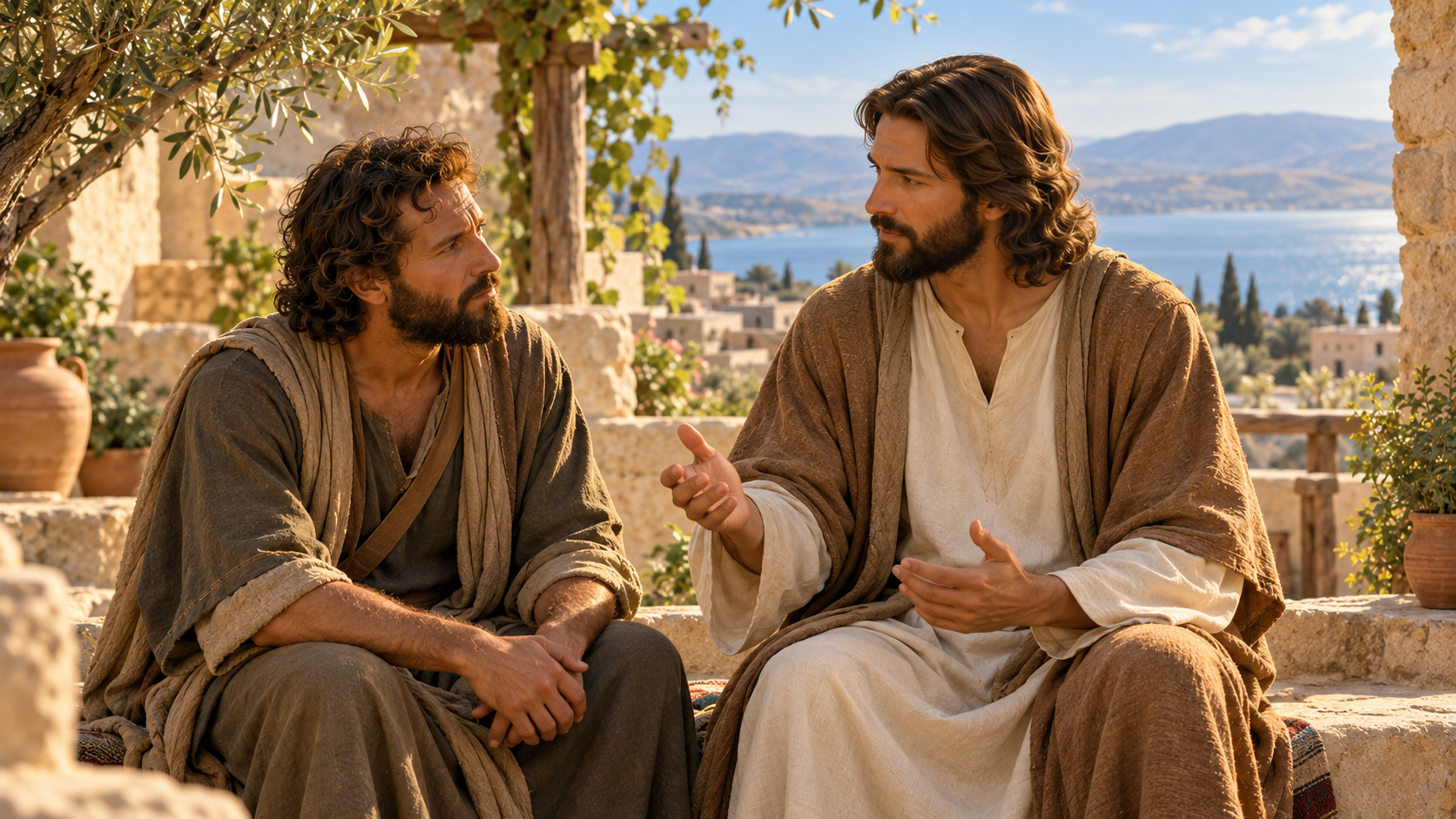
Central Truth: Jesus, God’s Son, willingly pays what He does not owe to avoid unnecessary offense.
The Son Who Does Not Insist on His Rights
Matthew 17:24–27 places an ordinary question about a payment beside an extraordinary disclosure of Jesus’ identity. The Father has declared Him to be the beloved Son. Now Jesus teaches Peter something about the freedom that belongs to Him and the humility with which He exercises it.
The account must be read with that identity in view. Its central concern is not a technique for obtaining money. It reveals the Son who willingly pays what He does not owe and whose humility does not diminish His authority.
Jesus Reveals His Freedom as God’s Son
Matthew 17:24–26
When Jesus and His disciples arrive in Capernaum, collectors of the two-drachma tax ask Peter whether his teacher pays it. Peter answers yes. Matthew does not tell us that his answer is impulsive or deliberately mistaken, and we should not supply that judgment.
When Peter enters the house, Jesus speaks first and asks a question about earthly kings. Do they collect taxes from their own sons or from others? Peter answers that they collect from others, and Jesus draws the conclusion that the sons are exempt.
The analogy illuminates Jesus’ unique sonship. His freedom flows from who He is, not from a temporary inability to make the payment. The Son’s relationship to the Father establishes the point of His exemption.
The plural sons belongs naturally to the illustration about kings and their families. It does not, by itself, establish that Peter possesses the same exemption as Jesus. Although the payment will cover both of them, we must not infer that their identities or grounds of obligation are therefore identical.
Jesus Voluntarily Restrains His Freedom to Avoid Offense
Matthew 17:27a
Jesus then explains that He will provide payment so that they do not give offense. He has not withdrawn His teaching about the Son’s freedom. He chooses not to insist on that freedom in this circumstance.
His action reveals humility under the control of love and purpose. Possessing a right does not require exercising it at every opportunity. The glorious Son is willing to forego an assertion of His exemption rather than create an unnecessary obstacle.
This principle needs careful application. Jesus does not teach that truth should be abandoned whenever someone objects. Faithfulness sometimes requires standing firm even when people take offense. A biblical conviction is different from a personal preference, and obedience cannot be surrendered simply to gain approval.
Nevertheless, many conflicts arise because we insist on privileges that love could willingly relinquish. We should ask whether the issue before us requires fidelity to God’s word or merely protects our desire to have our own way. Christ’s example challenges the assumption that every legitimate freedom must be exercised.
Jesus Demonstrates His Authority Through Extraordinary Provision
Matthew 17:27b
Jesus tells Peter to go to the sea, cast a hook, take the first fish, and find a coin in its mouth. He directs Peter to use it to pay for them both. The details display an authority that extends beyond the ordinary knowledge and resources available to Peter.
Matthew records the instruction rather than narrating Peter’s subsequent actions. We should retain that distinction when describing the event. We do not need to add a scene of Peter discovering the coin in order to recognize the extraordinary character of Jesus’ command.
The coin covers Jesus and Peter, but their inclusion in one payment does not establish identical exemptions. Nor is the account a universal promise that believers will receive miraculous money whenever a bill is due. Its purpose is to reveal the authority of Christ in connection with His willing humility.
Jesus’ service does not result from weakness. The One who chooses to pay is the One who knows and directs the provision. His freedom, humility, and authority belong together.
Freedom Shaped by the Character of Christ
Peter is learning that the greatness of Jesus includes a willingness to serve without insisting on every right. The Son remains free even as He chooses to pay. His action teaches a kind of humility that does not depend on denying the truth about who He is.
We should apply that lesson with both conviction and generosity. Scripture governs the principles we must defend. Love should govern our willingness to yield preferences and privileges that need not become barriers to others.
Following Christ involves more than asking what we are entitled to do. It involves considering how our choices represent the Lord we follow. His example directs us toward the faithful use of freedom for the good of others.
For Reflection
- How does Jesus’ identity establish the meaning of His exemption?
- Why must we avoid assuming that Peter’s answer or exemption is identical to Jesus’?
- Where could you relinquish a preference without compromising a biblical conviction?
- How does Christ’s extraordinary authority deepen the significance of His voluntary humility?
FOLLOW ME: MADE BY JESUS traces how Jesus calls, teaches, corrects, restores, and transforms Peter into the disciple He intends him to become.
Formation: FREEDOM — Jesus teaches Peter that freedom does not require insisting on one’s rights.
Study & Teaching Resources
Use the participant handout during class. Review the completed notes afterward, or open the teaching slides for a visual summary of the lesson.
Read Matthew 17:24–27 (NASB 1995)
Read the passage — NASB 1995
MATTHEW 17:24–27 | NASB95
24 When they came to Capernaum, those who collected the two-drachma tax came to Peter and said, “Does your teacher not pay the two-drachma tax?”
25 He *said, “Yes.” And when he came into the house, Jesus spoke to him first, saying, “What do you think, Simon? From whom do the kings of the earth collect customs or poll-tax, from their sons or from strangers?”
26 When Peter said, “From strangers,” Jesus said to him, “Then the sons are exempt.
27 However, so that we do not offend them, go to the sea and throw in a hook, and take the first fish that comes up; and when you open its mouth, you will find a shekel. Take that and give it to them for you and Me.”
Scripture quotations taken from the New American Standard Bible® (NASB), Copyright © 1960, 1971, 1977, 1995 by The Lockman Foundation. Used by permission. All rights reserved. www.Lockman.org